Introduction: Why Surface Matters
In the world of disposable gloves, performance begins at the surface. While the bulk elastomer material, whether natural rubber (NR), nitrile (NBR), or polychloroprene (CR), provides the foundational barrier properties and mechanical strength, it is the thin polymer coating on the glove surface that determines the day-to-day user experience: how easily the glove dons, how it feels during extended wear, and whether it remains functional in humid or moisture-rich environments.
Donning efficiency, in particular, is not merely a matter of convenience. Research has demonstrated that surface treatment choices, including chlorination and the application of polymer coatings, measurably affect the time and effort required to don gloves. A 2021 study published in Ergonomics found that both chlorination strength and moisture conditions significantly influence donning performance, with implications for healthcare settings where rapid glove changes are critical. Modern disposable gloves increasingly rely on performance-enhancing surface treatments to meet the demands of clinical, industrial, and cleanroom applications, where speed, comfort, and reliability are non-negotiable.
This article examines the role of polymer coatings in disposable glove manufacturing, explores the technical functions they serve, and presents application-specific solutions that address the diverse needs of today's glove markets.
The Core Functions of Polymer Coatings in Disposable Gloves
Polymer coatings serve multiple critical functions that extend beyond simple aesthetics. Understanding these functions is essential to selecting the right coating system for a given application.
Donning and Low-Friction Handling
The primary purpose of polymer coatings is to reduce surface tack and friction, enabling smooth, efficient donning. Uncoated or poorly treated rubber surfaces exhibit high coefficient of friction, particularly when moisture is introduced, whether from handwashing, sanitizer residue, or perspiration. Studies have shown that polymer-coated latex gloves perform consistently well in both dry and wet hand conditions, eliminating the significant donning time increases observed with chlorinated gloves when moisture is present. This consistency is particularly valuable in high-turnover clinical environments where glove changes must be rapid and reliable.
Anti-Blocking and Tack Control
Freshly manufactured gloves, especially those with high filler loadings or certain compounding formulations, can exhibit surface tack that causes gloves to stick to one another during packaging, storage, and handling. Polymer films act as release agents, preventing this self-adhesion and ensuring that gloves separate cleanly and consistently from the stack. This anti-blocking function is critical for high-speed automated packaging lines and for end-user satisfaction, as blocked gloves frustrate wearers and slow down donning procedures.
Protein and Allergen Management
The shift toward powder-free gloves was driven largely by concerns over latex protein allergens and the airborne dissemination of cornstarch powder. While leaching processes during manufacturing significantly reduce extractable protein levels in natural rubber latex products, residual proteins can still be present on the glove surface. Polymer coatings can act as an additional barrier, reducing direct skin contact with residual proteins. Process improvements in dipped rubber manufacturing, including pre-vulcanization leaching, post-vulcanization leaching, and surface coating, have collectively contributed to safer latex glove products with reduced allergenic potential. Regulatory pressure in the United States, Germany, and the United Kingdom has mandated powder-free gloves in many applications, making surface coatings an essential alternative for achieving smooth donning without powder.
Surface Uniformity and Tactile Response
Polymer coatings contribute to surface uniformity, which in turn affects tactile sensitivity and grip. A well-formulated coating provides a consistent surface texture that balances smoothness (for donning) with sufficient grip (for handling instruments or materials). The coating also influences the visual appearance of the glove, whether glossy, matte, or semi-matte, which can be important for branding and user preference in certain market segments.
The Evolution Beyond Powder: Why Polymer Coatings?
Historically, cornstarch powder was the industry standard for facilitating glove donning. Powder absorbed moisture, reduced friction, and made the donning process effortless. However, the drawbacks of powder became increasingly apparent over time. Cornstarch particles can carry latex proteins into the air, increasing sensitization risk for healthcare workers. Powder can also interfere with wound healing, contaminate sterile fields, and cause respiratory irritation.
The regulatory response was swift. By the mid-2010s, the U.S. Food and Drug Administration (FDA) had banned powdered gloves for medical use, and similar restrictions were enacted in Europe. This regulatory shift necessitated the development of powder-free alternatives that could deliver comparable donning performance. Chlorination emerged as the first widely adopted solution, exposing the glove surface to chlorine gas or hypochlorite solution to modify the surface chemistry and reduce tack. While effective, chlorination alone has limitations, particularly in the presence of moisture.
Polymer coatings represent the next generation of donning technology. These coatings, typically based on acrylate polymers, polyurethanes, or silicone blends, provide a thin, uniform film that delivers smooth donning performance independent of hand moisture conditions. Unlike chlorination, which modifies the existing rubber surface, polymer coatings add a discrete functional layer that can be engineered for specific performance characteristics: smoothness, anti-blocking, softness, or even moisture absorption.
Matching Coatings to Glove Types: Application-Specific Solutions
Not all gloves are created equal, and neither are their coating requirements. The choice of polymer coating depends on the base elastomer, the intended application, the manufacturing process (in-line vs. off-line coating), and regulatory considerations such as silicone-free requirements for cleanroom or medical device assembly environments.
Natural Rubber Examination Gloves
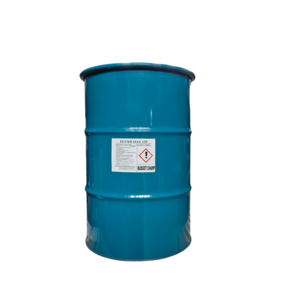 Natural rubber examination gloves are the workhorse of healthcare settings, valued for their excellent barrier properties, elasticity, and tactile sensitivity. However, NR formulations, particularly those with high filler levels for cost optimization, can exhibit surface tack that complicates donning. Flexicoat 129, an acrylate-based polymer coating, addresses this challenge by providing a silky-smooth donning surface with strong adhesion to the NR substrate, even at high filler concentrations. The coating's compatibility with chlorination and sterilization processes makes it suitable for medical-grade applications.
Natural Rubber Surgical Gloves
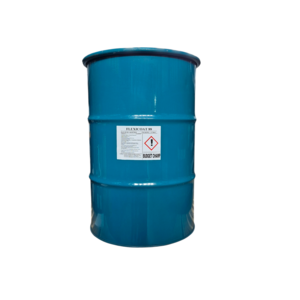 Surgical gloves demand the highest standards of barrier integrity, tactile sensitivity, and donning reliability. These gloves are typically chlorinated to meet powder-free requirements, but additional polymer coating enhances performance. Flexicoat 88 is formulated for surgical glove applications, offering smooth donning while remaining compatible with both chlorination and post-coating sterilization protocols (gamma irradiation or ethylene oxide). The coating does not interfere with the glove's mechanical properties or sterility assurance.
Polychloroprene (CR) Gloves
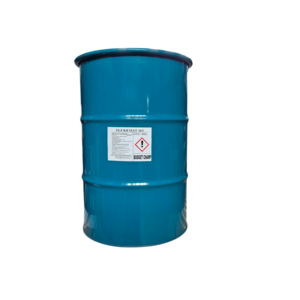 Polychloroprene gloves serve as the primary latex-free alternative in medical settings, offering good chemical resistance and hypoallergenic properties. CR surfaces can be challenging to coat due to differences in surface energy compared to NR. Flexicoat 163 is specifically designed for CR substrates, providing a smooth, non-glossy finish with effective anti-blocking properties. The matte appearance is often preferred in surgical and examination applications for aesthetic reasons.
Nitrile (NBR) Gloves
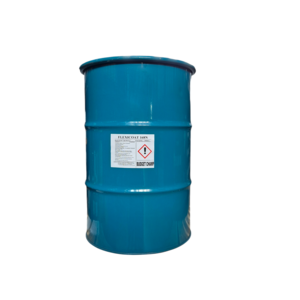 Nitrile gloves have seen explosive growth in recent years due to their superior chemical resistance, puncture resistance, and allergen-free profile. NBR surfaces, particularly in thin-gauge examination gloves, can exhibit blocking issues during packaging. Flexicoat 168N delivers smooth, anti-blocking performance optimized for high-speed manufacturing lines. The coating's fast-drying characteristics minimize production cycle time, an important consideration for manufacturers operating multi-shift production schedules.
Polyisoprene Gloves
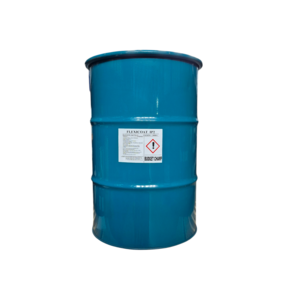 Polyisoprene represents a synthetic alternative to natural rubber, offering similar elasticity and tactile properties without latex proteins. Like NR, polyisoprene benefits from surface coating to reduce tack and improve donning. Flexicoat IP2 is formulated for polyisoprene substrates, providing smooth donning performance and compatibility with chlorination and sterilization processes.
Industrial Natural Rubber Gloves
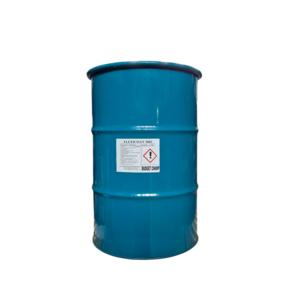 Industrial gloves often incorporate pigments or colorants for product differentiation or to meet specific industry standards (for example, food processing applications requiring blue gloves). Polymer coatings for industrial gloves must avoid discoloration or marking on colored films. Flexicoat 3082 is engineered to provide a smooth NR surface without leaving visible polymer residue or altering the glove's appearance, making it ideal for colored industrial glove applications.
Process-Enabling Coatings and Additives
Beyond glove-type-specific coatings, manufacturers require specialized products that address process challenges, regulatory requirements, and emerging market needs.
Silicone-Free, Cleanroom-Ready Solutions
Many industries, including semiconductor manufacturing, pharmaceutical production, and medical device assembly, prohibit silicone-containing materials due to contamination concerns. Silicone can migrate onto surfaces, interfering with adhesion, coating processes, or electronic component assembly. SF Coat 2 is a silicone-free acrylate coating designed for cleanroom and controlled-environment applications. The coating is available in variants optimized for different latex types (NR, NBR, CR), ensuring broad applicability across product lines.
Off-Line Coating Systems
While most polymer coatings are applied during the primary dipping process (in-line coating), some manufacturers prefer post-production coating (off-line) for greater process flexibility or to retrofit existing production lines. SSA/OLC combines acrylate polymers with polyurethane dispersions to deliver a low-temperature-curing coating system that produces a smooth, non-tacky finish without requiring high-temperature ovens. Similarly, OFPC, a silicone polymer blend, provides a soft-feel, non-tacky surface for NBR and NR gloves through off-line application. These systems allow manufacturers to add coating capability without reconfiguring their primary dipping lines.
Chlorination Support and Stripping Aids
Chlorination remains a widely used surface treatment, but it can leave residual tack if not followed by appropriate rinsing or post-treatment. NSE-2, a silicone-free rinse additive, reduces post-chlorination tack and improves the final surface quality. For the stripping (de-molding) step, where gloves are removed from ceramic or aluminum formers, OS8 and OSF-22 serve as stripping aids that facilitate smoother glove removal and reduce the risk of tearing during demolding. OSF-22 is formulated without silicone, making it suitable for applications where silicone contamination must be avoided.
Damp-Hand Donning and Comfort Enhancements
In certain applications, such as food processing or industrial work environments, gloves must be donned frequently with damp or wet hands. Traditional coatings can become slippery under these conditions, paradoxically making donning more difficult. Hydrosoft is a moisture-absorbing coating that provides a silky feel while actively managing surface moisture. The silicone-free formulation makes it appropriate for food-contact applications, and the moisture-wicking properties improve comfort during extended wear.
Why Budget Champ Delivers Comprehensive Polymer Coating Solutions
The diversity of glove types, manufacturing processes, and end-use requirements necessitates a broad portfolio of coating solutions. Budget Champ's polymer coating range addresses this complexity through several key advantages:
Application-Specific Formulation: Rather than offering a one-size-fits-all solution, Budget Champ provides coatings tailored to specific elastomer types (NR, CR, NBR, polyisoprene) and application categories (examination, surgical, industrial). This specialization ensures optimal adhesion, performance, and compatibility with downstream processing.
Process Flexibility: The portfolio includes both in-line and off-line coating systems, allowing manufacturers to select the approach that best fits their production capabilities and business model. In-line coatings integrate seamlessly into existing dipping lines, while off-line systems enable retrofitting and process optimization without major capital investment.
Regulatory Compliance: With silicone-free variants available across the product range, Budget Champ supports manufacturers serving cleanroom, medical device, and food-contact markets where silicone contamination is prohibited. The coatings are formulated to support manufacturers' compliance with relevant chemical regulatory standards for glove export to different global markets.
Manufacturing Efficiency: High-speed production lines demand coatings that dry quickly, apply uniformly, and do not interfere with automated handling systems. Budget Champ coatings are designed with manufacturing efficiency in mind, minimizing cycle time and reducing the risk of production defects such as uneven coating distribution or blocking during packaging.
Technical Support: Beyond providing chemical products, Budget Champ offers formulation consultation and application support to help manufacturers optimize coating processes, troubleshoot performance issues, and adapt to changing market requirements.
Conclusion
Polymer coatings represent an essential technology in modern disposable glove manufacturing, enabling the transition from powdered to powder-free products while maintaining, and in many cases improving, donning performance, user comfort, and manufacturing efficiency. As the glove industry continues to evolve in response to regulatory pressures, supply chain considerations, and end-user expectations, the role of surface technology will only grow in importance.
The technical literature confirms what manufacturers have observed in practice: surface treatments matter. Donning efficiency, blocking behavior, and user perception are all measurably affected by coating choices. Budget Champ's comprehensive portfolio of polymer coatings provides manufacturers with the tools to address these challenges across the full spectrum of glove types and applications, from high-volume examination gloves to specialized cleanroom products.
For manufacturers seeking to optimize their glove formulations, improve production efficiency, or enter new market segments, the selection of an appropriate polymer coating system is a critical decision. Budget Champ's technical team is available to assist with formulation matching, application trials, and process optimization to ensure that coating performance aligns with manufacturing capabilities and market requirements.
References
Preece, D., Hong Ng, T., Tong, H. K., Lewis, R., and Carre, M. J. (2021). The effects of chlorination, thickness, and moisture on glove donning efficiency. Ergonomics, 64(9), 1205-1216. https://doi.org/10.1080/00140139.2021.1907452
Lovato, M. J., Del Valle, L. J., Puiggali, J., and Franco, L. (2023). Performance-Enhancing Materials in Medical Gloves. Journal of Functional Biomaterials, 14(7), 349. https://doi.org/10.3390/jfb14070349
Perera, A. L. H. A., and Perera, B. G. K. (2017). Development of an Economical Method to Reduce the Extractable Latex Protein Levels in Finished Dipped Rubber Products. BioMed Research International, 2017, 9573021. https://doi.org/10.1155/2017/9573021
Nucera, E., Aruanno, A., Rizzi, A., and Centrone, M. (2020). Latex Allergy: Current Status and Future Perspectives. Journal of Asthma and Allergy, 13, 385-398. https://doi.org/10.2147/JAA.S242058