

The latex glove manufacturing industry faces a persistent challenge: maintaining the integrity of ceramic hand formers while ensuring thorough removal of production residues. Traditional high-alkaline cleaners, while effective at removing coagulant deposits, can severely damage the ceramic formers that are essential to the production process. This operational dilemma has driven the development of more sophisticated cleaning solutions that balance efficacy with equipment preservation.
The Critical Challenge: Balancing Cleaning Power with Former Preservation
Ceramic hand formers represent a significant capital investment in latex glove production lines. These formers must withstand repeated thermal and chemical cycles while maintaining dimensional accuracy. However, the very nature of the latex dipping process creates cleaning challenges that can compromise former longevity.
During production, calcium-based coagulants react with latex to form a solid glove structure on the ceramic former. Over time, residues accumulate—particularly calcium stearate deposits and ring-shaped scale formations at the cuff portion of formers, as well as at fingertips and textured surface areas. These deposits resist removal and, if left unaddressed, compromise production quality and process efficiency.
The industry's historical solution—strong alkaline cleaners with pH values exceeding 13.5—creates a new problem. Research has documented that such highly alkaline conditions cause severe corrosion of ceramic materials. Studies on alumina ceramics exposed to caustic alkaline solutions have shown that corrosion attack begins at grain boundaries, with corrosion rates increasing linearly with sodium hydroxide concentration[1]. This grain boundary degradation leads to surface pitting, progressive weakening of the ceramic structure, and ultimately shortened former lifespan. The mechanism involves preferential attack of silica-containing phases within the ceramic matrix, which are particularly vulnerable to dissolution in strong alkali environments[1].
Understanding the Calcium Stearate Challenge
Calcium stearate presents unique cleaning difficulties due to its chemical properties. Unlike sodium or potassium soaps, calcium stearate is virtually insoluble in water and does not form lather—characteristics that make it particularly resistant to conventional cleaning approaches. This insolubility stems from the strong ionic bonding between calcium cations and the long-chain stearate anions, creating a stable, waxy compound that adheres tenaciously to ceramic surfaces.
Research into soap scum dissolution—of which calcium stearate is the primary component—has identified this material as "a major challenge for hard surface cleaners"[2]. Studies have demonstrated that effective removal requires a multi-pronged approach: chelating agents to sequester calcium ions, surfactants to solubilize the stearate portion, and alkaline pH conditions to enhance the process[2]. However, achieving this removal without damaging the underlying ceramic substrate requires careful formulation.
The NRL Series Solution: Alkaline Cleaning, Engineered for Ceramic Compatibility
The NRL Series of alkaline cleaners is engineered to clean effectively without driving the wash solution into an unnecessarily aggressive regime for ceramic formers. The approach combines controlled alkalinity with targeted surface-protection and bath-stability technologies, so cleaning power is maintained while the risk of grain-boundary attack and surface degradation is reduced. This formulation philosophy is implemented through a multi-faceted corrosion prevention strategy outlined below.
Product Line Overview

NRL (Standard Formula)
A chlorinated alkaline cleaner incorporating sodium hypochlorite with proprietary stabilizers. The chlorine component provides oxidative cleaning power for organic residues while the controlled alkaline base addresses inorganic deposits. The stabilizer system prevents premature decomposition of the active chlorine, ensuring consistent performance throughout the cleaning cycle.

NRL-PB (Hypochlorite-Compatible Blend)
A concentrated alkaline and surfactant cleaner designed for use with sodium hypochlorite. It includes a chlorine stabilizer to maintain oxidizing power during cleaning and is suitable for ceramic formers used in powder and powder-free glove production.
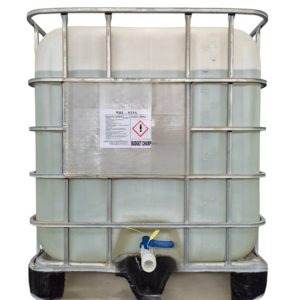
NRL-S33A (Enhanced Surfactant Formula)
Building upon the NRL base, this variant incorporates advanced surfactant technology specifically selected for calcium stearate residue removal. The surfactant blend works synergistically with the alkaline matrix to penetrate, emulsify, and lift fatty acid deposits that would otherwise resist cleaning.
Multi-Faceted Corrosion Prevention Strategy
The optimized alkalinity profile is only one element of the NRL series' ceramic protection approach. The formulations incorporate:
Water-Conditioning & Hardness Control System
Rather than relying solely on single-component chelators like EDTA or NTA, the product series uses a purpose-designed sequestration and water-conditioning package to manage hardness ions in alkaline wash solutions. This helps maintain detergency, supports consistent wetting on glove formers, and reduces mineral interference that can undermine cleaning performance. The result is more stable cleaning behavior across typical operating temperatures and rinse conditions.
Corrosion Inhibitors
Specific additives interact with the ceramic surface to form protective barriers that resist alkaline attack. These inhibitors preferentially adsorb at grain boundaries—the most vulnerable sites for corrosion initiation—providing localized protection where it's most needed.
Scale Suppression & Anti-Redeposition Control
Beyond keeping hardness ions managed in solution, the formulation includes components that suppress mineral re-precipitation and discourage loosened residues from reattaching during the cleaning cycle. This prevents the formation of new deposits even as old ones are removed, helping break the cycle of residue accumulation and restoring more consistent former cleanliness over time.
Process Efficiency and Resource Optimization
Modern manufacturing operations demand cleaning solutions that deliver consistent performance while optimizing resource utilization and operational costs. The NRL series formulations address these requirements through several key design features:
Concentrated, High-Activity Formulations
The NRL series delivers cleaning performance through concentrated active ingredients, reducing the volume of product required per cleaning cycle. This minimizes packaging materials, reduces transportation costs and associated carbon emissions, and decreases storage space requirements at manufacturing facilities.
Optimized Use-Rate Efficiency
Carefully balanced formulations achieve effective cleaning at controlled dilution ratios, ensuring that chemical consumption is optimized for the actual cleaning task. This prevents both under-dosing (which compromises cleaning) and over-dosing (which wastes product and increases costs).
Extended Bath Life Through Advanced Stabilization
Proprietary stabilizer systems maintain the activity of the cleaning bath over extended use periods, reducing the frequency of bath dumps and replacements. This directly translates to:
- Lower chemical consumption per unit of production
- Reduced wastewater generation
- Decreased labor for bath maintenance
- Less production downtime for cleaning system servicing
Dual-Action Alkaline Cleaning
A key advantage of the NRL series is its ability to effectively address both organic (calcium stearate) and inorganic (scale) deposits within a single alkaline cleaning stage. Traditional liquid caustic solutions typically target only inorganic deposits, requiring additional steps or more aggressive conditions to handle calcium stearate buildup. By combining both capabilities, the NRL formulations streamline the alkaline cleaning stage and reduce the need for:
- Multiple sequential alkaline cleaning steps with different chemical systems
- Excessively high pH levels to compensate for poor organic deposit removal
- Extended soak times or elevated temperatures to address stubborn residues
- Manual intervention for deposits that resist conventional alkaline cleaning
Temperature-Optimized Performance
Effective cleaning at moderate operating temperatures (compared to extremely aggressive alkaline alternatives) reduces energy consumption while improving workplace safety during handling and use.
Compatibility with Standard Wastewater Treatment
The formulations are designed to integrate with conventional industrial wastewater treatment systems, facilitating proper disposal through existing infrastructure without requiring specialized treatment protocols or equipment modifications.
Superior Calcium Stearate Removal Performance
The advanced surfactant and chelating systems specifically target the most problematic deposit type in latex glove manufacturing. By removing these deposits more completely and consistently, the formulations prevent the progressive buildup that often necessitates increasingly aggressive (and more damaging) cleaning interventions.
Operational Benefits
The technical advantages of the NRL series translate into tangible operational improvements:
Extended Former Life
By minimizing corrosion-related degradation, ceramic formers maintain dimensional accuracy and structural integrity through more production cycles. This directly reduces replacement frequency and associated downtime.
Consistent Product Quality
Properly cleaned formers without corrosion-induced surface irregularities produce gloves with better dimensional consistency and fewer defects. This reduces rejection rates and improves overall production efficiency.
Reduced Maintenance Downtime
The dual-action formulation eliminates the need for multiple sequential alkaline cleaning cycles or aggressive manual intervention within the alkaline cleaning stage, streamlining the maintenance process and reducing line downtime.
Lower Total Cost of Ownership
While advanced formulations may carry higher unit costs than traditional alkaline cleaners, the extended former life, improved efficiency, and reduced ancillary costs (water, energy, labor) lower total operational costs when viewed across the complete equipment lifecycle.
Improved Workplace Safety
Operating at pH 11-13 (below the pH 13.5+ threshold of traditional caustic cleaners) reduces the handling hazards associated with extremely corrosive materials, improving workplace safety while maintaining cleaning effectiveness.
Predictable, Consistent Performance
The stabilized formulations deliver repeatable cleaning results across production shifts and batches, reducing variability and enabling more reliable production planning.
Conclusion
The development of the NRL series alkaline cleaners represents a shift from the traditional "stronger is better" approach to industrial cleaning. By applying fundamental understanding of ceramic corrosion mechanisms and calcium stearate chemistry, these formulations achieve effective cleaning without the equipment degradation inherent in older, more aggressive alternatives.
For latex glove manufacturers, this translates into a solution that addresses both immediate cleaning needs and long-term equipment preservation—a balance that increasingly defines competitive advantage in modern manufacturing operations.
References
- Sato, T., Sato, S., & Okuwaki, A. (1991). Corrosion behavior of alumina ceramics in caustic alkaline solutions at high temperatures. Journal of the American Ceramic Society, 74(10), 2615-2619.
- Soontravanich, S., Scamehorn, J.F., & Sabatini, D.A. (2010). Dissolution study of salt of long chain fatty acids (soap scum) in surfactant solutions. Part I: Equilibrium dissolution. Journal of Surfactants and Detergents, 13(4), 391-401.
